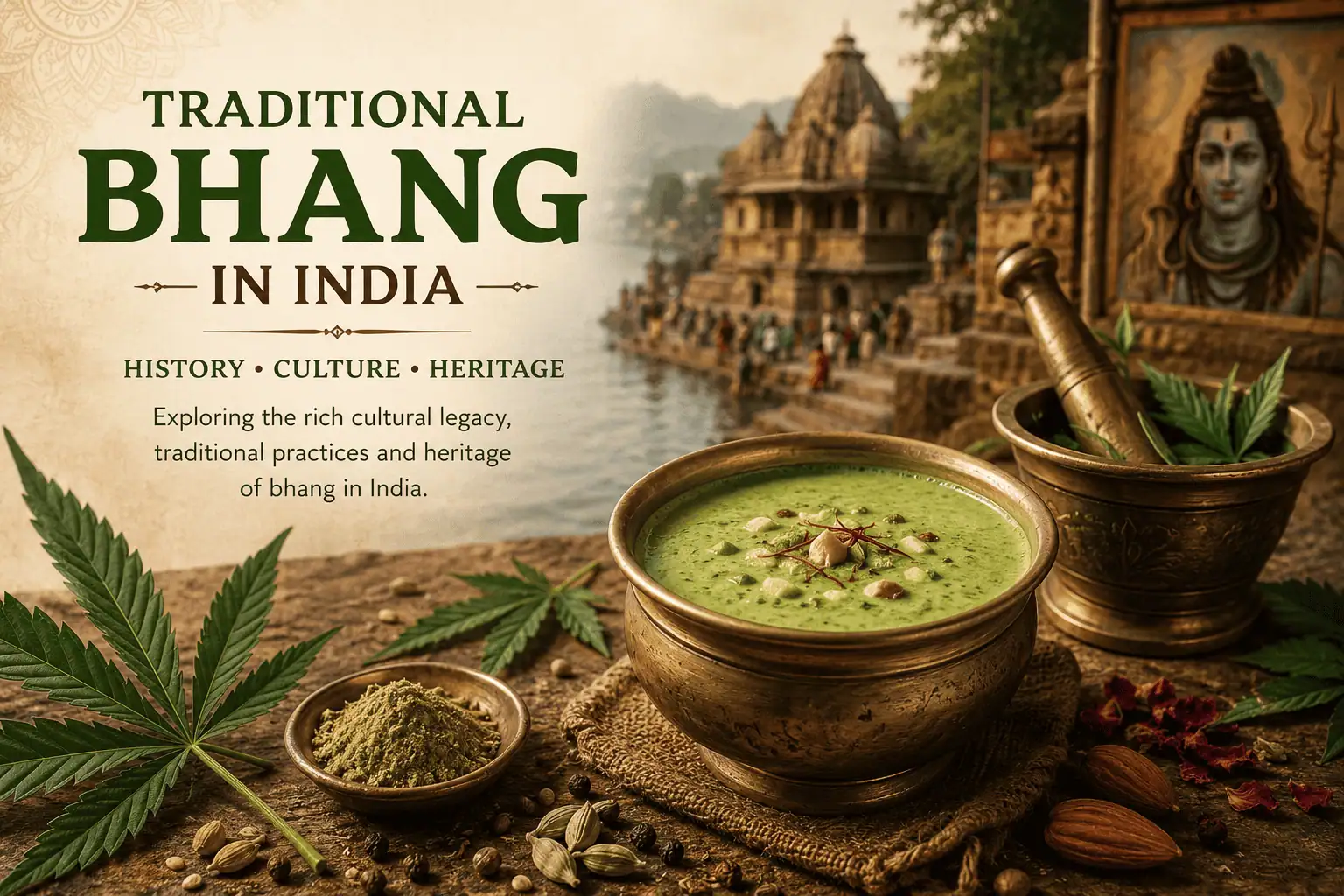
Traditional Bhang in India: Culture, History & Heritage
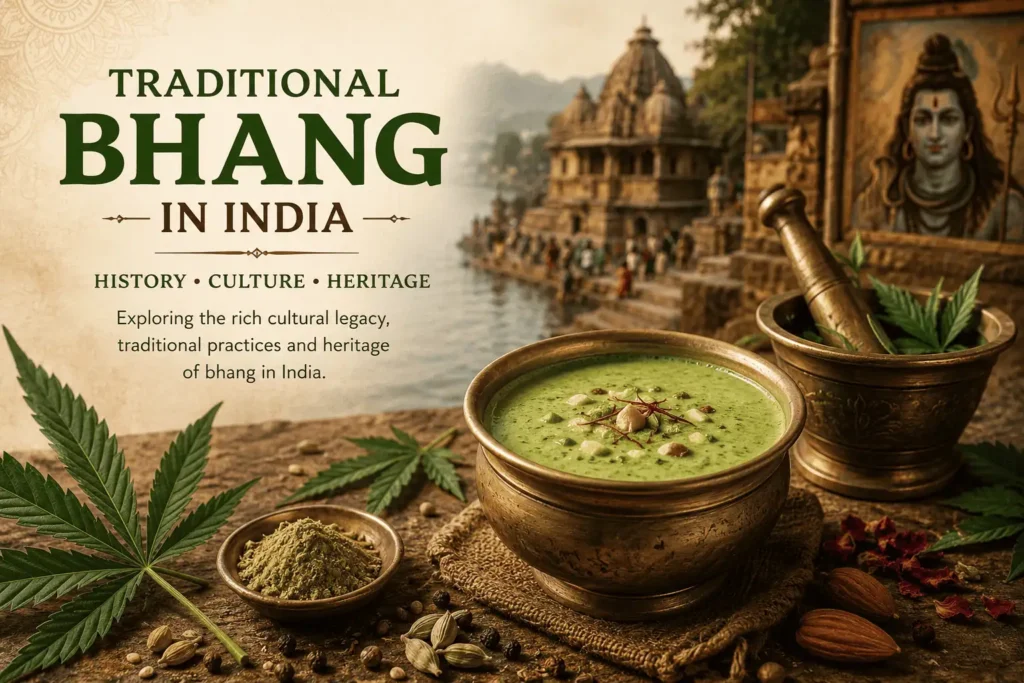
Traditional bhang in India has a long-standing connection with the country’s cultural heritage, regional customs, festivals, and traditional practices. Across generations, bhang has been mentioned in historical sources and associated with particular cultural and festive traditions in different parts of the country.
The story of bhang is not limited to one region or one preparation. Instead, it reflects India’s remarkable diversity of customs, foods, herbs, celebrations, and community traditions.
This guide explores the traditional bhang in India from a cultural and historical perspective, including its heritage, regional traditions, connection with festivals, traditional preparation practices, and its place in modern India.
Disclaimer: This article is intended for educational and cultural information only. Laws and regulations relating to bhang and cannabis-related products can vary by state and may change over time. Always check and follow the applicable laws in your location.
What Is Traditional Bhang in India?
Bhang is a traditional preparation associated with the cannabis plant and has been known in India for centuries. Its cultural history is connected with regional customs, traditional food and beverage preparations, festivals, and community practices.
The term traditional bhang in India does not refer to one standardized recipe or preparation. Different communities and regions have historically developed their own customs, ingredients, and methods.
This regional variation is important when discussing the cultural history of bhang. A preparation associated with one region or community may be quite different from traditions found elsewhere.
For a beginner-friendly explanation of the product format, you can also read our What Is Bhang Goli? guide.
History of Bhang in India
The history of bhang in India extends across many generations. References to cannabis and related preparations appear in historical, cultural, and traditional sources, while later customs connected bhang with particular festivals and social occasions.
Over time, different communities developed their own traditions surrounding preparation and use. Local ingredients, culinary practices, religious customs, and regional culture all influenced how these traditions evolved.
However, the history of bhang should not be viewed as a single uninterrupted tradition. Practices have changed over time, and their importance has varied between regions and communities.
For a more detailed historical discussion, read our dedicated History of Bhang in India article.
Traditional Bhang in India and Cultural Heritage
Traditional bhang in India forms part of a broader cultural landscape that includes regional foods, herbs, festivals, rituals, and community traditions.
Its cultural associations can include:
- Traditional festivals
- Regional customs
- Community celebrations
- Traditional recipes
- Historical practices
- Seasonal occasions
- Knowledge passed between generations
These associations demonstrate how traditional preparations can become connected with cultural identity over long periods.
At the same time, Indian culture is extremely diverse. Not every community or region has the same traditions surrounding bhang, so it is important to understand these practices within their specific historical and cultural context.
Traditional Bhang in India and Indian Festivals
One of the best-known cultural associations of bhang is its connection with certain Indian festivals.
Bhang is often discussed in relation to festivals such as Holi and Maha Shivratri. In some communities, traditional preparations have historically been associated with these occasions.
However, these practices are not universal across India. Customs can differ significantly according to region, community, family traditions, and individual beliefs.
Indian festivals often combine food, music, religious observances, social gatherings, and regional customs. Traditional bhang has appeared within this wider cultural environment in some communities.
Understanding these specific cultural associations provides a more accurate perspective than treating bhang as a practice followed uniformly throughout India.
Regional Traditions of Bhang in India
India’s regional diversity has played an important role in shaping traditional bhang practices.
Different parts of the country have developed their own food traditions, ingredients, preparation styles, and cultural customs. As a result, there is no single preparation that can represent every historical tradition of bhang.
In some communities, traditional knowledge was passed from parents and grandparents to younger generations. Recipes and preparation practices could also change according to locally available ingredients and regional culinary influences.
This regional diversity is an important part of the story of traditional bhang in India.
Rather than thinking of bhang as one fixed product, it is more useful to understand it as a collection of regional traditions that have developed over time.
Traditional Bhang Preparation Practices
Historical and regional preparations associated with bhang have varied considerably.
Traditional practices could involve different ingredients, grinding techniques, recipes, and ways of preparing food or beverages. The exact preparation depended on the local custom and occasion.
Traditional preparations may be associated with:
- Regional recipes
- Herbal ingredients
- Traditional grinding techniques
- Festival preparations
- Local culinary customs
- Family or community practices
It is important to distinguish historical preparation traditions from modern commercial products.
A packaged product sold today may use different ingredients, manufacturing processes, packaging standards, and labeling from preparations that existed historically.
Traditional Bhang in India in Modern Times
Traditional customs continue to influence how bhang is discussed in modern India, while contemporary products have introduced new formats and packaging.
Today, people researching traditional bhang may encounter products such as bhang goli and bhang powder.
Ojasya provides a dedicated Bhang Products collection where visitors can explore available product categories.
You can also explore the Bhang Goli collection and Bhang Powder collection.
These modern products should not automatically be considered identical to historical preparations. Product formulation, ingredients, manufacturing methods, packaging, and labeling can vary.
For this reason, consumers should always review the information supplied with a packaged product and consider the applicable laws and regulations in their location.
Traditional Bhang Products in India
The term traditional bhang products can refer to different formats associated with traditional preparations.
Modern packaged products may include products such as:
- Bhang goli
- Bhang powder
- Other traditional-style preparations
Each product can differ in ingredients, formulation, packaging, and intended presentation.
If you want to understand the different product formats in more detail, visit our Traditional Bhang Products in India guide.
This allows readers to explore the subject from a product-information perspective without confusing modern commercial products with historical preparations.
Traditional Bhang vs Modern Packaged Products
An important distinction when researching traditional bhang in India is the difference between historical preparations and modern packaged products.
| Traditional context | Modern packaged context |
|---|---|
| Regional customs | Commercial product |
| Family or community recipes | Manufactured formulation |
| Local preparation practices | Standardized packaging |
| Historical traditions | Modern labeling |
| Cultural context | Retail environment |
A historical preparation may have been made according to a family or regional recipe, while a modern product is manufactured and packaged for contemporary retail.
Therefore, the word “traditional” should be understood in context rather than assuming that every modern product is identical to a historical preparation.
What to Check on a Packaged Bhang Product
If you are researching packaged products, it is useful to examine the information provided by the manufacturer or seller.
Important information can include:
- Product name
- Ingredients
- Manufacturer or seller details
- Packaging information
- Batch information
- Storage instructions
- Applicable warnings
- Product labeling
- Relevant legal requirements
Our Quality Bhang Goli Guide provides additional information about what readers can review when evaluating product packaging and product information.
Exploring Ojasya Bhang Products
Readers interested in contemporary packaged products can explore the Ojasya Bhang Products collection.
For example, the Ojasya Bhang Goli product page provides product-specific information for visitors who want to learn more about that particular offering.
You can also explore the Bhang Powder product page for information about that product format.
These links are provided as additional resources for readers and should not be interpreted as a claim that modern packaged products are identical to historical preparations.
How Bhang Traditions Have Evolved
Like many traditional practices in India, bhang-related customs have evolved over time.
Changes in regional lifestyles, food traditions, manufacturing, commerce, social attitudes, and regulations have influenced how traditional preparations are represented today.
As a result, modern discussions about bhang can include two different contexts:
- Historical and cultural traditions
- Contemporary packaged products
Keeping these contexts separate helps readers understand the subject more accurately.
A product available today should not automatically be assumed to have exactly the same ingredients, preparation method, or cultural context as a historical preparation.
Why Traditional Bhang Matters to Indian Cultural Heritage
Studying traditional bhang in India provides an opportunity to explore the relationship between cultural practices and regional traditions.
The subject can be understood through several perspectives.
Cultural History
Historical traditions help explain how bhang became associated with particular communities and occasions.
Regional Diversity
Different regions developed different customs, recipes, and interpretations.
Festival Traditions
Certain festivals contributed to the cultural recognition of bhang in some communities.
Traditional Knowledge
Recipes and practices were often passed between generations.
Modern Representation
Today, traditional bhang may also be represented through commercially packaged products that differ from historical preparations.
Understanding all of these perspectives provides a more balanced view of the subject.
Bhang and Indian Cultural Diversity
India’s cultural heritage includes thousands of regional traditions involving foods, herbs, spices, beverages, festivals, religious practices, and community customs.
Bhang is one example of how a traditional preparation can become associated with particular cultural settings.
Its significance is therefore best understood within India’s wider cultural diversity rather than as a practice that represents every Indian community.
This perspective also helps explain why descriptions of traditional bhang can vary between regions and historical sources.
Frequently Asked Questions
What is traditional bhang in India?
Traditional bhang refers to historical and regional preparations associated with the cannabis plant and Indian cultural practices. The preparation, ingredients, and customs can vary significantly between regions and communities.
Is bhang part of Indian culture?
Bhang has historical and cultural associations in parts of India, particularly in connection with certain festivals and regional traditions. However, customs vary considerably between communities and regions.
Which Indian festivals are associated with bhang?
Bhang is commonly discussed in connection with festivals such as Holi and Maha Shivratri in some cultural traditions. The nature and extent of these associations vary by region and community.
Are modern bhang products the same as traditional preparations?
Not necessarily. Modern packaged products can differ from historical or regional preparations in ingredients, formulation, manufacturing, packaging, and labeling.
Where can I learn about the history of bhang?
You can read our History of Bhang in India article for a dedicated historical overview. You can also consult Wikipedia’s Bhang page for additional general background.
Where can I learn about different bhang product formats?
Our Traditional Bhang Products in India guide discusses different traditional-style product formats and provides additional information.
Related Ojasya Guides
If you want to explore related topics, these resources may be useful:
- What Is Bhang Goli?
- History of Bhang in India
- Traditional Bhang Products in India
- Bhang Goli vs Bhang Powder
- Is Bhang Goli Legal in India?
- Quality Bhang Goli Guide
- How to Store Bhang Goli
Conclusion
Traditional bhang in India represents a distinctive intersection of cultural heritage, regional customs, festivals, traditional knowledge, and modern product formats.
Its story is not limited to one region, recipe, or historical period. Instead, different communities and generations have contributed to the diverse traditions associated with bhang.
Understanding this heritage also requires distinguishing historical practices from contemporary packaged products. Modern products may differ considerably from traditional preparations in their ingredients, formulation, manufacturing, packaging, and labeling.
By exploring the cultural history, regional traditions, festival associations, and modern context surrounding bhang, readers can gain a broader and more balanced understanding of this distinctive aspect of India’s cultural landscape.
Disclaimer: This article is provided for educational and informational purposes only. Laws and regulations concerning bhang and cannabis-related products may vary by state, region, and time. Readers should verify the applicable laws and regulations in their location and comply with them. Product information should always be reviewed on the relevant product packaging and manufacturer-provided information.